In an emergency, always call 999 first. This website does not replace hands-on training.
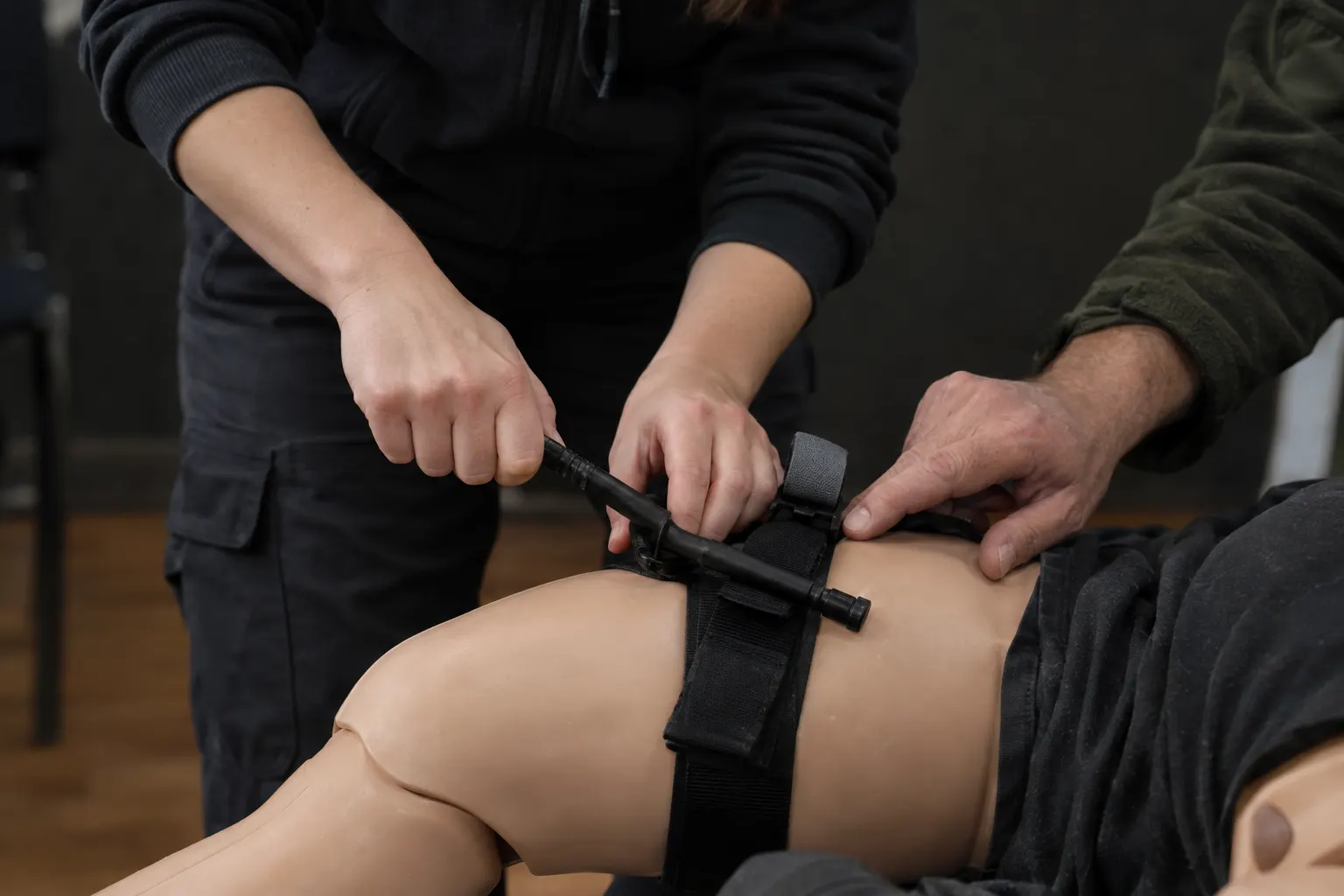
A trainee tightens a tourniquet on a training manikin's leg while an instructor guides their hands

Bleed-control education for every community

Anyone can stop a bleed. We'll show you how.

We bring free, hands-on bleed-control training to schools, sports clubs and community groups across Cornwall and the South West. Practise what to do if someone is seriously injured, with an experienced responder there to guide you.

Why it matters

The minutes before the ambulance belong to the community.

Road collisions, falls through glass, farm and power-tool injuries, sports accidents, knife crime and major incidents can all cause catastrophic bleeding. Help is on its way, but severe blood loss does not wait. What happens first is down to whoever is already there: a neighbour, a parent, a teammate, a passer-by.

That's why we focus on education in the community. The more people who know what to do, the more likely it is that someone nearby will step in, and the less it matters how far away the ambulance is.

Time to death from severe bleeding
3–5minutes

Severe bleeding can cause death in this window, often before emergency services can arrive.

Trauma deaths involving uncontrolled bleeding
Up to 40%
Public bleed control kits placed across the UK by one charity alone
30,000+
Who is first on scene
Almost always, a bystander.

Figures: citizenAID; Charity Today on Bleed Map and the Daniel Baird Foundation; European trauma bleeding guideline.

Free guide · Learn the basics

Stop a bleed in six steps.

A free, plain-English guide based on current UK first aid guidance. Read it now, share it with your family and print it for your club or workplace. Then come and practise it with us, because doing it once with your own hands is what builds confidence.

Download the printable guide (PDF)

Step 01

Spot a life-threatening bleed

A severe bleed usually slows with pressure. A life-threatening bleed doesn't, and can kill within minutes. These are most likely after a stabbing, a power-tool accident or a serious road collision.

Warning signs

  • Blood is pumping or spurting from the wound
  • Pressure isn't stopping or slowing the bleeding
  • Blood is quickly soaking through dressing after dressing

Remember

  • Clothing can hide a wound, so look for blood pooling or soaking through
  • Act fast: you don't need to be certain to start pressing

Based on Resuscitation Council UK first aid guidelines and London Ambulance Service.

Step 1 of 6
Body diagram showing treatment zones: arms and legs in red for a tourniquet, neck, shoulders and groin in amber for wound packing, and the chest, back and abdomen in charcoal for firm pressure

Treatment zones

Where to use what.

Where the wound is tells you what to reach for. Start with hard, direct pressure everywhere, then use this as your guide.

  • TourniquetArms and legs. If pressure isn't stopping a life-threatening bleed, apply it high and tight above the wound.
  • Pack the woundNeck, shoulders, armpits and groin, where a tourniquet can't go. Pack deep wounds firmly, then keep pressing hard.
  • Firm pressureChest, back and abdomen. Press hard over the wound and don't pack it. Leave an open chest wound uncovered unless you're trained to use a vented chest seal.

This guide is for awareness and doesn't replace hands-on training. In an emergency, always call 999 and follow the call handler's instructions.

Myths and facts

What stops people helping, and why it shouldn't.

Most people who freeze at the scene of an injury do so because of a worry, not a lack of willingness. Here are the most common ones.

“I might make it worse.”

Firm, continuous pressure is the most important and effective thing a bystander can do, and it can be done with no special equipment (London Ambulance Service). Doing something is far better than doing nothing.

“I could get sued.”

In England and Wales, the SARAH Act 2015 means courts must take into account that you stepped in to help someone in an emergency (Royal College of Nursing).

“You need a special kit.”

Dedicated bleed kits help, but they aren't essential. A tea towel, face cloth or T-shirt pressed hard onto the wound can save a life (London Ambulance Service).

“Pull the knife or glass out.”

Leave it in. It may be plugging the wound. Press firmly on either side of it instead (NHS).

“Loosen the tourniquet now and then.”

Once it's on, don't release it. Only a healthcare professional should (Resuscitation Council UK).

Got a question we haven't answered?

Bring it to a session. Every one includes time for questions and plenty of hands-on practice.

Find a session near you

Community sessions

We come to you.

Practical, friendly and jargon-free. Our sessions run in the places people already gather, with manikins, wound simulators and real training tourniquets. No medical background needed. Every community session is free to attend and free to host.

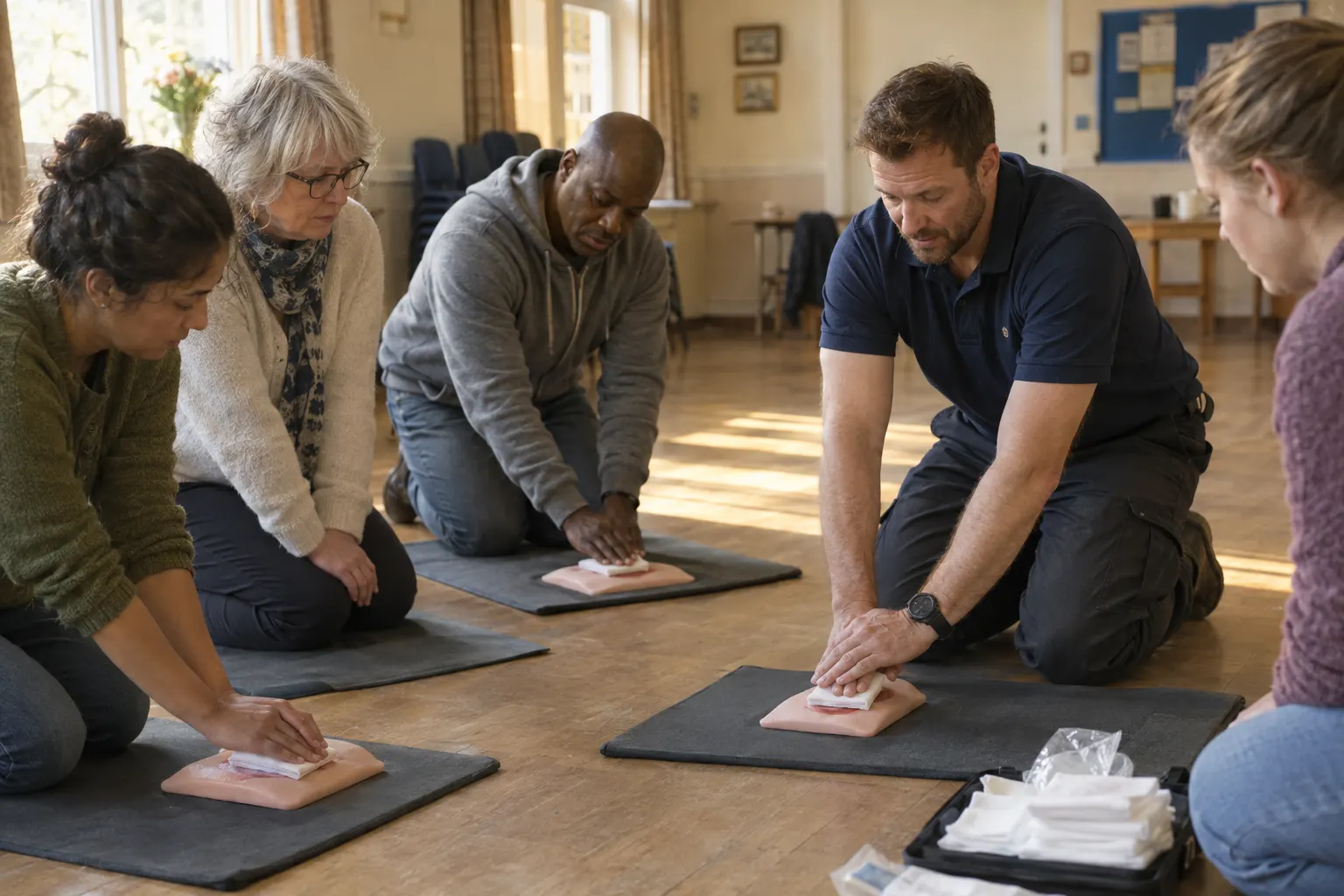
A mixed group of adults kneel on mats in a village hall practising direct pressure while an instructor demonstrates

Village halls, clubs & community groups

Bleed Ready Community

Our core community session. Spot a life-threatening bleed, call for help, apply pressure, pack a wound and use a tourniquet, then practise until it feels natural. Ideal for parish councils, sports clubs, faith groups, parents, carers, residents' associations and neighbourhood groups.

Host a free session

Schools & young people

Bleed Ready Youth

Calm, age-appropriate sessions for secondary schools, colleges, cadets, scouts and youth groups. Focused on staying safe, getting help and controlling bleeding, with plenty of practice.

  • LengthOne lesson to a half day
  • Ages11 and up
Enquire for your school or group

Individuals

Bleed Ready Essentials

Want a certificate, or to go a little deeper? Join an open Essentials course with others from your area and leave with a certificate of attendance.

  • LengthAround 2 hours
  • IncludesCertificate of attendance
Register interest

Hosting a session is easy.

  1. 1Find a space and your people A hall, clubhouse, classroom or meeting room, and around 8 to 12 people keen to learn.
  2. 2We bring everything else An experienced instructor, manikins, wound simulators, training tourniquets and handouts.
  3. 3Everyone leaves ready Confident to act, and knowing where their nearest public bleed kit is.
Ask about hosting a session

Bleed control kits

A kit on the wall is only half the answer.

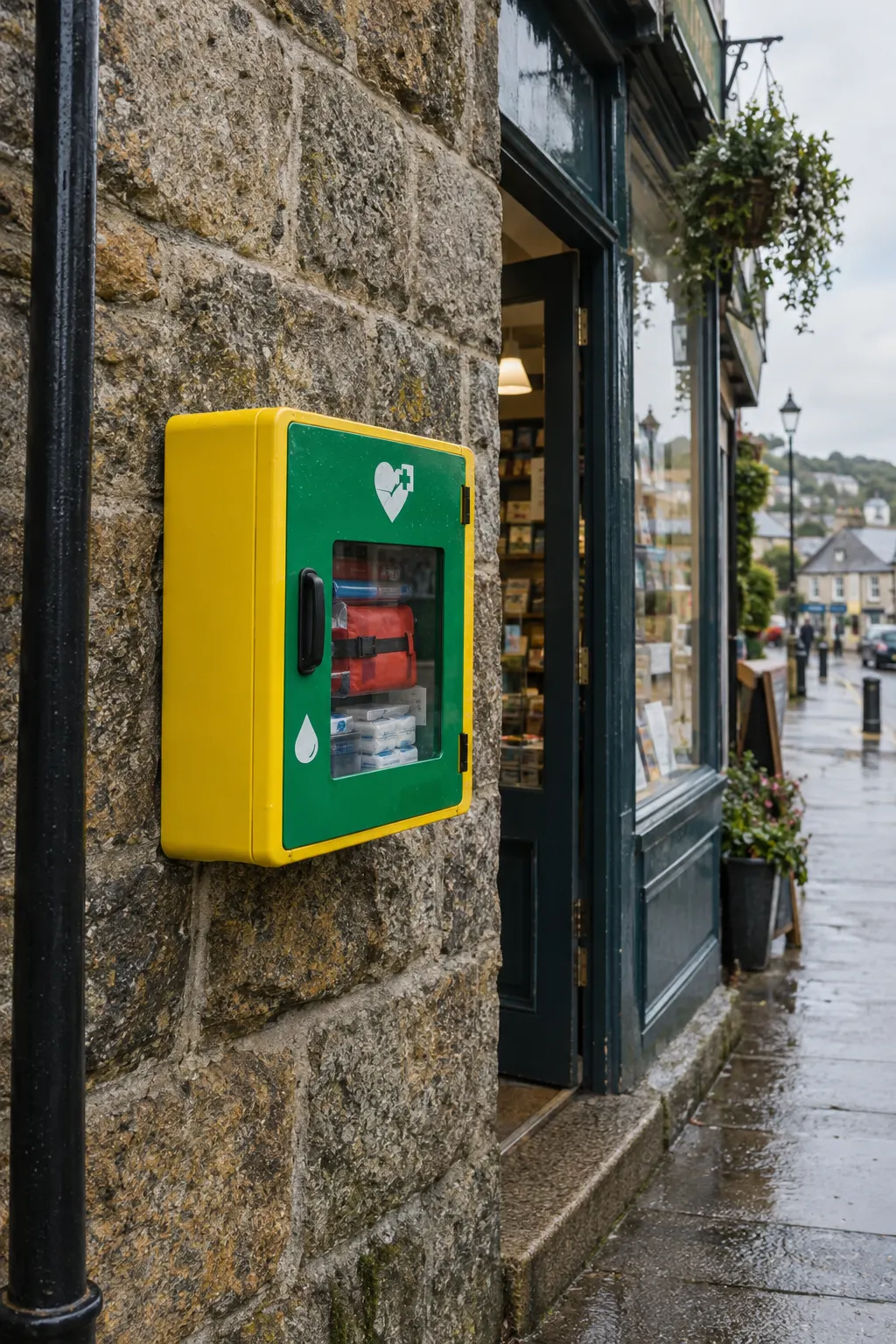
Public bleed control kits are appearing in high streets, stations, pubs and village halls, often beside defibrillator cabinets. They're designed to be usable by anyone, but confidence comes from having practised first.

Every Bleed Ready session shows people how to find and use their nearest public kit, and encourages every kit to be registered on Bleed Map, the national bleed kit register, so partner ambulance services can direct 999 callers to it.

  • Know where your nearest kit is
  • Register any kit you host
  • Practise before you need it
  • Carry your own IFAK
A public access emergency cabinet mounted on a granite wall beside a high street shop doorway

Build your own IFAK

Your own bleed kit, ready before you need it.

An IFAK (individual first aid kit) is a small personal kit built around the injuries that kill quickly, above all catastrophic bleeding. A wall-mounted kit stays where it is, but an IFAK comes with you, in your bag, car, work van or sports holdall. This guide covers what to put in one and how to use it.

What goes in it

The essentials. These match the core contents of recognised bleeding-control kits (STOP THE BLEED).

  • Nitrile gloves, two pairsProtect you. Don't let putting them on delay pressure on the wound.
  • Tourniquet, ideally twoFor bleeding from an arm or leg that pressure won't control. Sometimes a second one is needed above the first (Resuscitation Council UK).
  • Packing gauzeHaemostatic gauze if possible, or plain compressed gauze. It goes straight onto the wound or is packed into it.
  • Trauma (pressure) dressingHolds the pressure on once the bleeding is under control.
  • ShearsCut through clothing so you can see where the blood is coming from.
  • Permanent markerWrite down the time the tourniquet went on.
  • Foil blanketPeople who lose a lot of blood get cold fast.

Once you're trained: a vented chest seal. Without training, the guidance is to leave an open chest wound uncovered, and only trained people with the right kit should apply a vented dressing (Resuscitation Council UK). Keep plasters and everyday items in a separate pouch so the life-saving kit is quick to find.

How to use it

Use the items in the order the injury needs them. The kit backs up the skills in Learn the basics, it doesn't replace them.

  1. Stay safe and call 999Opening the kit never comes before the call. Put it on speaker.
  2. Gloves on, wound exposedCut the clothing away with the shears to find the source of the bleeding.
  3. Press or packPut the gauze directly onto the wound, packing it into deep wounds, and press hard. Don't let go (Resuscitation Council UK).
  4. Wrap itOnce the bleeding is controlled, apply the trauma dressing firmly over the top.
  5. Tourniquet if neededFor limb bleeding that pressure won't stop: 5–7 cm above the wound, not over a joint, and tighten until the bleeding stops. It will hurt.
  6. Mark, warm, hand overWrite the time on it, never loosen it, wrap them in the foil blanket and tell paramedics what you used.

Look after your kit

Same place, every time

Carry it where you'll actually be. Pack it in the order you'd use it, with the tourniquet on top, so you can open it fast with one hand.

Check it every six months

Check the expiry dates, look for torn packets, and inspect the tourniquet's strap, windlass and clip. Heat in a car or van wears kit out faster.

Buy genuine tourniquets

Counterfeits are sold online. In one test they produced less than a quarter of the force of a genuine CAT tourniquet, and some broke (Crisis Medicine). Buy from a reputable medical supplier.

Train with a trainer

Practise with a separate tourniquet marked "trainer" and never carry it as your real one. Replace anything you use straight away.

Learn to build and use an IFAK

In our IFAK workshop you'll look at each item, learn what's worth buying, and practise using all of it on training kit. Free to attend. Bring your own kit if you have one. This guide is general education and isn't a substitute for hands-on training.

Ask about an IFAK workshop
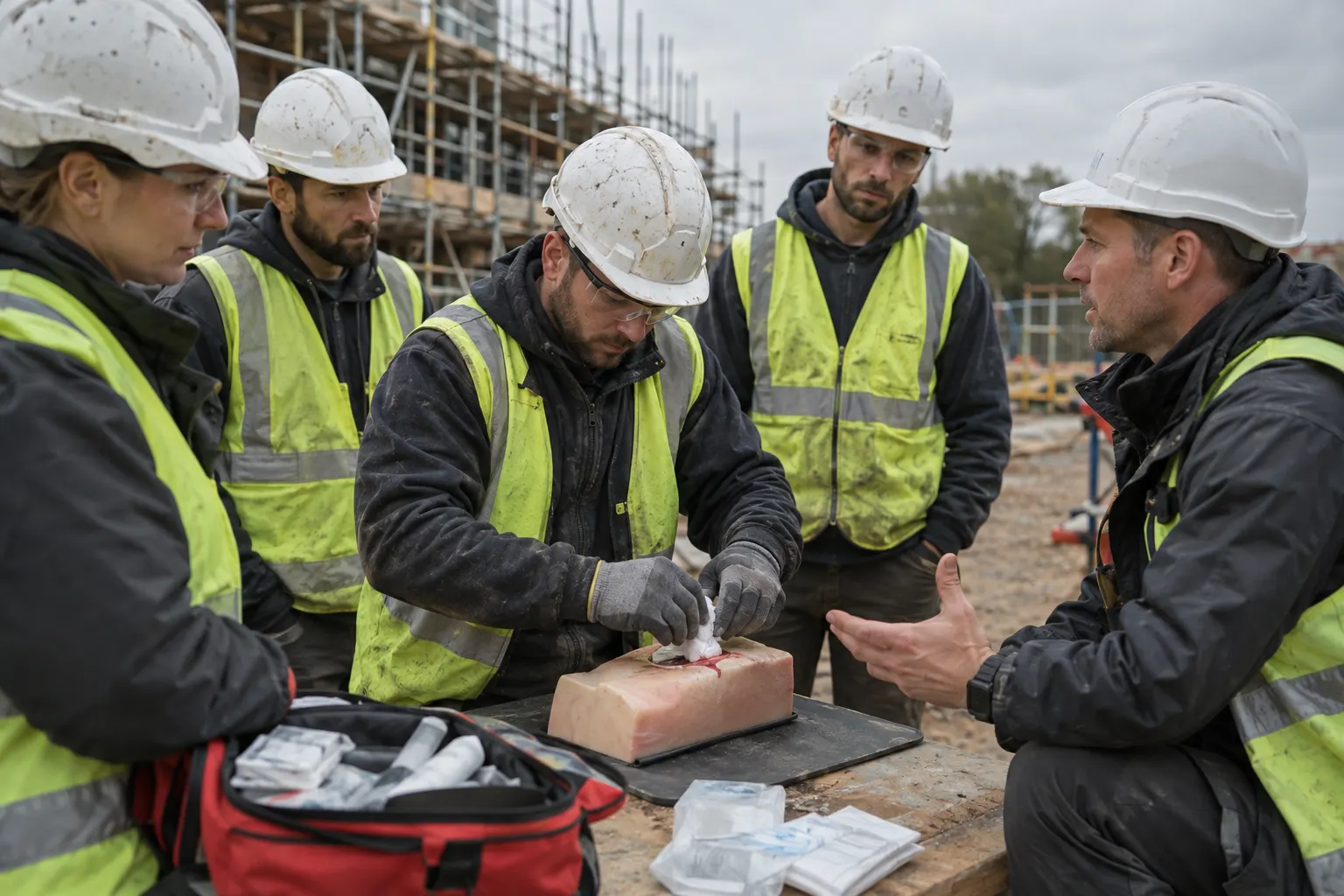
Construction workers in hi-vis and hard hats watch an instructor during on-site bleeding-control training beside scaffolding

Workplaces & venues

Training for organisations that funds training for communities.

We also deliver Bleed Ready Workplace, a half-day on-site course built around your real risks, your kit and your team. Income from workplace training goes into Bleed Ready and helps keep community and school sessions free.

  • Construction & scaffolding Cuts, crush and fall injuries far from the road.
  • Hospitality & events Pubs, clubs, door teams, stewards and venue staff.
  • Agriculture & rural business Machinery, tools and long response times.
  • Retail, transport & public venues Front-line staff who meet the public.
Enquire about workplace training

Our purpose

Why Bleed Ready exists.

Severe bleeding is one of the most preventable causes of death after an injury. The skills needed to stop it are simple, and anyone can learn them in a single session. Bleed Ready UK exists to make sure more people in our communities have those skills.

Serious bleeding isn't only linked to violence. It can follow a road collision, a fall through glass, a farm or workshop accident, a sports injury or a slip in the kitchen. It can happen at home, at work or out in the community.

Ambulance crews do an outstanding job, but they can't be everywhere at once, and in rural areas the journey can be long. In those first minutes, the person who can help most is whoever is already there.

Public bleed kits are a big step forward, but a kit only helps if someone feels able to open it and use it. Hands-on practice turns knowledge into confidence, so people act quickly instead of freezing.

Most of us can picture calling 999 for a friend, a colleague or a stranger. Would you know what to do while help is on its way?

Bleed Ready UK teaches people in local schools and community groups, free of charge, how to recognise life-threatening bleeding and act quickly. Your donation, however big or small, helps our trainers travel and pays for the kit people practise with, so their first experience of controlling a severe bleed can be in a training room.
Help fund local bleed-control training Learn the basics now

“Pressure, pack, tourniquet. Simple skills, taught well, in the hands of ordinary people. That's how lives get saved before the ambulance arrives.”

Mark Tucker, Founder, Bleed Ready UK

Our mission

A bleed-ready person in every street, school and team.

Bleed Ready UK was founded in Cornwall by Mark Tucker, a former Royal Marine with military medical training, years of event medical and pre-hospital experience, and a career teaching first aid, trauma care and personal safety. Mark volunteers as a Community First Responder with South Western Ambulance Service and received the SWAST Chief Executive's Commendation Award in 2025. We've seen what happens in those first minutes, and we know ordinary people can change the outcome.

Our community training is free

Bleed Ready UK is a not-for-profit initiative run under the umbrella of C360 Group Ltd. There's no charge to attend or host a community session. To keep it that way, we rely on donations, however big or small. Every donation goes into Bleed Ready's dedicated account and pays for:

  • Travel, so our trainers can reach communities across Cornwall, the South West and beyond
  • Training kit: manikins, wound simulators and training tourniquets
  • Consumables used in practice, such as gloves, gauze and dressings

As we grow, we plan to:

  • Reach more schools, youth groups and community organisations
  • Prioritise rural communities and areas with longer ambulance response times
  • Launch Kit Guardian training for venues and community buildings hosting a public bleed kit
  • Support the placement and registration of public bleed control kits
  • Train local volunteers as Bleed Ready community instructors

Bleed Ready UK is a not-for-profit initiative of C360 Group Ltd. It has its own dedicated bank account, and all donations, income and costs run through that account. It is not a registered charity, so donations can't be Gift Aided.

Get involved

Bring Bleed Ready to your community.

Want to host a session, join one near you, volunteer or support our work? Tell us a little about yourself and we'll be in touch. Community groups, schools and youth organisations: our training is free.

Based in
Cornwall, delivering across the South West and UK-wide by arrangement
Who we teach
Residents, parents, clubs, schools, volunteers and workplaces
Response
We aim to reply within two working days
I'm enquiring as

Please enter your name.

Please enter a valid email address.

We'll only use your details to respond to this enquiry.